
About
Bridging Worlds is a project supported by the Key Topics funding scheme of the School of Languages, Cultures and Societies of the University of Leeds.
Bridging Worlds é um projeto apoiado pelo esquema de financiamento 'Key Topics' da Escola de Línguas, Culturas e Sociedades da Universidade de Leeds.
Primary Investigator/Investigadora Principal
Stephanie Dennison
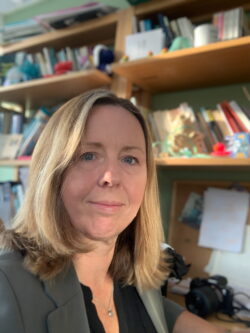
Stephanie Dennison is Professor of Brazilian Studies at the University of Leeds, UK. She was a Leverhulme International Academic Fellow at the Department of Multimeios at Universidade Estadual de Campinas in 2015. At Leeds, she is a founding member of the Centre for World Cinemas and Digital Cultures and she also co-founded the European network of researchers working in Brazilian Cultural Studies (REBRAC). She has published widely on film. Her prize-winning monograph Remapping Brazilian Film Culture in the 21st Century, was published by Routledge in 2020. Her most recent book is Brazilian Horror Cinema in the Twenty-First Century: Neo-Fascism, Disaffection, Resistance (Tamesis, 2025) which she co-edited with Laura Canepa. Stephanie is currently a Senior Fellow at Mecila (Maria Sibylla Merian Centre for Conviviality/Inequality in Latin America) in Sao Paulo, Brazil. Her fellowship research examines the potential for counter-mapping the concept of Lusofonia through a focus on Afro-descendant audio-visual culture in Brazil.
Stephanie Dennison é professora de Estudos Brasileiros na Universidade de Leeds, Reino Unido. Originária da Irlanda do Norte (e com dupla nacionalidade Reino Unido/Irlanda). Foi Leverhulme International Academic Fellow no Departamento de Multimeios da Universidade Estadual de Campinas em 2015. Em Leeds, é membro fundadora do Centre for World Cinemas and Digital Cultures e também cofundadora da Rede Europeia de Pesquisadores que trabalham em Estudos Culturais Brasileiros (REBRAC). Publicou amplamente sobre cinema. Sua premiado livro Remapping Brazilian Film Culture in the 21st Century foi publicado pela Routledge em 2020. Stephanie é atualmente pesquisadora sênior do Mecila (Centro Maria Sibylla Merian para Convivialidade/Desigualdade na América Latina) em São Paulo, Brasil. Sua pesquisa no Mecila examina o potencial de contra-mapear o conceito de lusofonia por meio de um foco na cultura audiovisual afrodescendente no Brasil.
Co-Investigators/Co-investigadoras
Victoria Adams
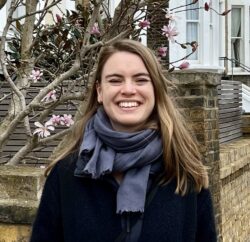
Victoria Adams’s research examines the intersections of cultural policy and digital culture in Brazil. Victoria joined the University of Leeds in October 2024 as a British Academy Postdoctoral Fellow. While at Leeds, she will investigate the impact of Pontos de Cultura — pre-existing community groups granted funding and multimedia equipment by the Brazilian government — 20 years after their introduction. Working with those involved in the Pontos de Cultura, Victoria’s research considers how this seminal cultural policy’s efforts to access cultural funding in Brazil have affected geographies and conceptions of cultural production in the country. It also asks what her collaborators’ experiences contribute to discussion in places like the UK where cultural institutions are concentrated in select regions and governments seek to ‘level up’ opportunities.
A pesquisa da Victoria Adams examina as interseções entre a política cultural e a cultura digital no Brasil. Victoria ingressou na Universidade de Leeds em outubro de 2024 como Bolsista de Pós-Doutorado da British Academy. No pós-doc em Leeds ela investigará o impacto dos Pontos de Cultura — grupos comunitários pré-existentes que receberam financiamento e equipamentos multimídia do governo brasileiro — 20 anos após sua introdução. Trabalhando com pessoas envolvidas nos Pontos de Cultura, a pesquisa de Victoria considera como os esforços dessa política cultural pioneira para ampliar o acesso ao financiamento cultural no Brasil afetaram as geografias e concepções da produção cultural no país. A pesquisa também questiona o que as experiências de seus colaboradores podem contribuir para o debate em países como o Reino Unido, onde as instituições culturais estão concentradas em regiões específicas e os governos buscam ‘nivelar’ as oportunidades.
Thea Pitman
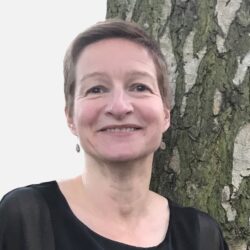
Thea Pitman is Professor of Latin American Studies in the School of Languages, Cultures and Societies at the University of Leeds, UK. She specialises in Latin American digital cultural production, focusing on issues of race, ethnicity, and gender and how these influence digital (self-)representations. Her most important publications to date include Latin American Cyberculture and Cyberliterature (Liverpool University Press, 2007), Latin American Identity in Online Cultural Production (Routledge, 2013), and Decolonizing the Museum: The Curation of Indigenous Contemporary Art in Brazil (Tamesis, 2021). Since 2023, she has been working on the AIAI: Artificial Intelligence, Art and Indigeneity project and the INDIGENIA: Generative AI for Indigenous Futures and ‘Digital Good Living’ projects, in collaboration with the Brazilian NGO Thydêwá and Indigenous artists, writers, community leaders and traditional knowledge holders in Argentina, Boliva, Brazil and Chile. These projects aim to bridge worlds by bringing Indigenous perspectives to bear on the rapid development of AI technologies.
Thea Pitman e professora titular na Escola de Línguas, Culturas e Sociedades da Universidade de Leeds, Reino Unido. Ela é especializada na produção cultural digital da América Latina, com foco em questões de raça, etnia e gênero e como estes vetores impactam nas (auto-)representações digitais. Suas publicações mais importantes até agora incluem Latin American Cyberculture and Cyberliterature (Liverpool University Press, 2007), Latin American Identity in Online Cultural Production (Routledge, 2013) e Decolonising the Museum: The Curation of Indigenous Contemporary Art in Brazil (Tamesis, 2021). Desde 2023, ela trabalha nos projetos AIAI: Inteligência Artificial, Arte e Indigeneidade e INDIGENIA: IA Generativa para Futuros Indígenas e ‘Bem Viver Digital’, em colaboração com a ONG brasileira Thydêwá e artistas, escritores, líderes comunitários e guardiões de conhecimentos tradicionais indígenas da Argentina, Bolívia, Brasil e Chile. Esses projetos visam conectar mundos, integrando perspectivas indígenas ao rápido desenvolvimento de tecnologias de IA.
Associate Investigators/Investigadores Associados
Alexsandro Cosmo de Mesquita - "Alex Potiguara"
Alexsandro Cosmo de Mesquita - "Alex Potiguara" - is an independent researcher affiliated with the NGO Thydewá. In 2025, he developed the research "Indigenous Peoples and the Digital Bem Viver" at the University of Sheffield, UK, with a Fellowship from the ESRC Digital Good network. He holds a PhD and a Master's degree in Intelligence Technologies and Digital Design from the Pontifical Catholic University of São Paulo (PUC-SP). He has been developing research projects on the theme "Indigenous Peoples and Digital Technologies" since 2014. Among the various projects he is involved in, as well as the the aforementioned project, of note is "INDIGENIA: Generative AI for Indigenous Futures and the Digital Bem Viver", in partnership with the University of Leeds (UK), the University of Dublin (Ireland), and the NGO Thydêwá (Brazil), with the support of the Digital Good Network (UK). He is a member of the Expanded Coordination of the Pindorama Programme, at PUC-SP, and contributed to the project “Beyond the Amazon”, which received support from the Serra Pilheira Institute.
Alexsandro Cosmo de Mesquita - "Alex Potiguara", pesquisador independente vinculado à ONG Thydewá, em 2025 desenvolveu a pesquisa Povos Indígenas e o Bem Viver Digital na Universidade de Sheffield, Reino Unido, com um Fellowship da rede ESRC Digital Good. Doutor e Mestre em Tecnologias da Inteligência e Design Digital pela Pontifícia Universidade Católica de São Paulo (PUC-SP). Ele vem desenvolvendo projetos de pesquisa na temática “indígenas e tecnologias digitais” desde 2014. Entre os diversos projetos em que atua, destaca-se, além o projeto acima-mencionado, INDIGENIA: IA Generativa Para Futuros Indigenas e o Bem Viver Digital, em parceria com a Universidade de Leeds (UK), Universidade de Dublin (Irlanda) e a ONG Thydêwá (Brasil), com o apoio do Digital Good Network (UK). É membro da Coordenação Ampliada do Programa Pindorama, da PUC-SP, e contribuiu para o projeto “Para Além da Amazônia”, que recebeu apoio do Instituto Serra Pilheira.
Jasmin Wrobel
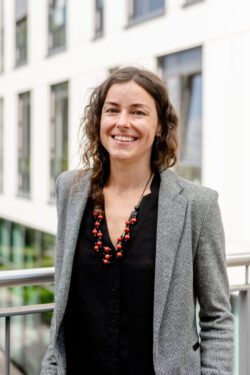
Jasmin Wrobel is assistant professor for Latin American cultural studies at Ruhr-Universität Bochum. Holding a PhD in Latin American studies from FU Berlin, she was a postdoctoral researcher at the Cluster of Excellence Temporal Communities: Doing Literature in a Global Perspective at the same university between 2019 and 2022, and a Marie Curie Postdoctoral Fellow at the University of Manchester from 2022 to 2023. She is currently working on a monograph on anti-patriarchal agencies in Latin American comics. Her research interests include feminist and anti-colonial comic art, Black resistance, experimental poetry, (neo-) baroque literature, cultural contacts between Brazil and Hispanic America, and literary and graphic mediations of memory discourses in Latin America.
Jasmin Wrobel é professora assistente de Estudos Culturais Latino-Americanos na Ruhr-Universität Bochum. Doutora em Estudos Latino-Americanos pela FU Berlin, foi pesquisadora de pós-doutorado no Cluster of Excellence Temporal Communities: Doing Literature in a Global Perspective na mesma universidade entre 2019 e 2022, e bolsista de pós-doutorado Marie Curie na Universidade de Manchester entre 2022 e 2023. Atualmente, está preparando um livro sobre agências antipatriarcais em quadrinhos latino-americanos. Seus interesses de pesquisa incluem arte em quadrinhos feminista e anticolonial, resistência negra, poesia experimental, literatura (neo)barroca, contatos culturais entre o Brasil e a América hispânica e mediações literárias e gráficas de discursos de memória na América Latina.
Gilberto Alexandre Sobrinho
Gilberto Alexandre Sobrinho is an Associate Professor in the Department of Multimedia, Cinema and Communication at UNICAMP, in Campinas (Brazil). He is dedicated to the study of cinema and audiovisual media, through both academic research and filmmaking practice. He also publishes and supervises postgraduate research on documentary, fiction and experimental cinema. His interests lie in the intersections between aesthetics, culture and politics, particularly in Afro-diasporic filmographies, as well as in works from Latin America, North America and Europe. He undertook postdoctoral research (Fapesp Fellowship) in the Department of Cinema at New York University and has been a Visiting Professor at San Francisco State University (Fulbright) and Universidad Iberoamericana (Mexico, Santander Fellowship). He has published books, book chapters and articles in academic journals and has also directed and produced films. He has developed curatorial film programmes as well. Since his doctoral studies, he has developed different collaborations with British Higher Education Institutions. He was first supervised by Laura Mulvey (Birkbeck College) during a doctoral research placement, and later took part in the projects “Troubling the National Brand and Voicing Hidden Histories: Historical Drama as a Tool for International Development and Community Empowerment” (AHRC/GCRF) and “Decolonising Publishing with Afro-Brazilian and Indigenous Scholars” (British Academy), collaborating mainly with Stephanie Dennison (University of Leeds).
Gilberto Alexandre Sobrinho é professor associado do Departamento de Multimeios, Cinema e Comunicação da UNICAMP, em Campinas (Brasil). Dedica-se ao estudo do cinema e do audiovisual, por meio de pesquisa acadêmica e prática cinematográfica. Publica e orienta pesquisas de pós-graduação sobre documentário, cinema de ficção e cinema experimental. Seus interesses residem nas interseções entre estética, cultura e política, particularmente em filmografias afro-diaspóricas, bem como em obras da América Latina, América do Norte e Europa. Realizou pesquisa de pós-doutorado (Bolsa Fapesp) no Departamento de Cinema da Universidade de Nova York e foi professor visitante na Universidade Estadual de São Francisco (Fulbright) e na Universidade Iberoamericana (México, bolsa Santander). Publicou livros, capítulos de livros e artigos em periódicos acadêmicos e também dirigiu e produziu filmes. Desenvolveu também programas de curadoria de filmes. Desde o doutorado, desenvolveu diferentes colaborações com instituições de ensino superior britânicas. Ele foi inicialmente supervisionado por Laura Mulvey (Birkbeck College) durante um estágio de pesquisa de doutorado e, posteriormente, participou dos projetos “Troubling the National Brand and Voicing Hidden Histories: Historical Drama as a Tool for International Development and Community Empowerment” (AHRC/GCRF) e “Decolonising Publishing with Afro-Brazilian and Indigenous Scholars” (British Academy), colaborando principalmente com Stephanie Dennison (Universidade de Leeds).